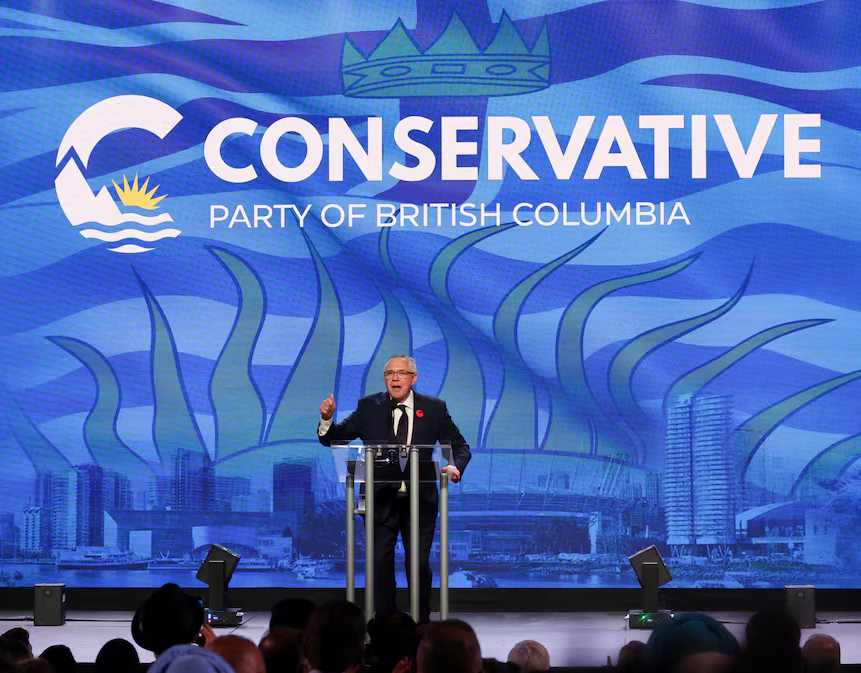
British Columbia’s former premier David Eby called a snap election this October, hoping to secure a majority during a messy time for the BC Conservatives. However, the election of MLA Lorne Doerkson ended nearly a decade of New Democratic government and an almost century-long moratorium on Conservative leadership. Due to the Constitutional separation of power, the provinces are the country’s largest land and resource managers – dictating nearly all aspects of environmental protection. As seen in Alberta and Ontario, Conservative provincial governments tend to be highly problematic for nature and climate policy.
Repealing BC’s Declaration on the Rights of Indigenous Peoples Act
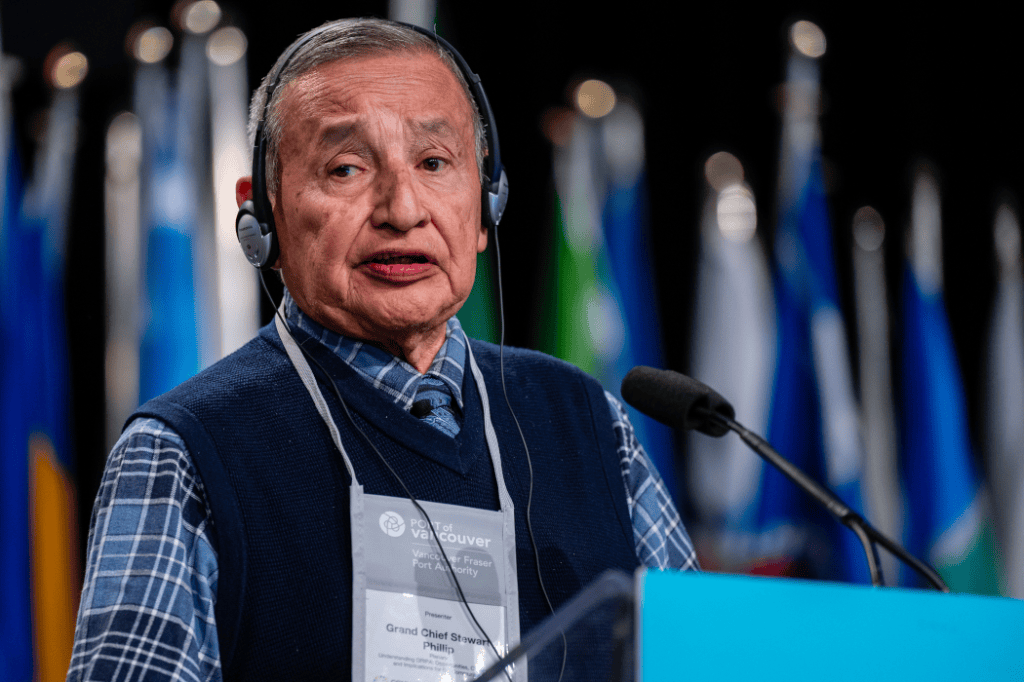
BC’s Declaration on the Rights of Indigenous Peoples Act (DRIPA) was created to align the province with the United Nation’s Declaration on the Rights of Indigenous Peoples (UNDRIP). However, Doerkson has made one of his top priorities to repeal DRIPA. This would greatly weaken the rights of First Nations to manage, use, and conserve their land, and is a stance fueled by misinformation. Critics claim that the act threatens private property rights and allows First Nations to halt development projects. In reality, political opposition against DRIPA primarily arose after December of 2025, when the BC Court of Appeal found that the provincial government’s obligations under DRIPA are legally enforceable. Meaning that First Nations can take the province to court if they believe the province’s laws or decisions violate the act.
Premier Eby intended to suspend the components of DRIPA that allowed court challenges of provincial laws that may not align with UNDRIP, arguing that such cases were an unsustainable burden on BC’s judicial system. Doerkson’s Conservatives make the same argument to justify repealing DRIPA entirely. Lamenting that “we are in court everywhere in this province”, and arguing for “economic reconciliation” to “make everyone equally successful”. This choice has been met with extreme backlash from Indigenous leaders, who point out that DRIPA has produced very strong results for First Nation-led resource development. Furthermore, it is not true that repealing DRIPA will relieve litigation burdens, as First Nations can still utilize section 35 of the Constitution to argue for their rights in court.
First Nations in British Columbia have expressed anger and disappointment in the attacks on DRIPA, which would be a major violation of their treaty and Constitutional rights, as well as a major step backwards for reconciliation. The Union of B.C. Indian Chiefs’ president Grand Chief Stewart Phillip has publicly stated that the repeal would be a “declaration of war” and will result in a “battleground BC”. While Assembly of First Nations BC Regional Chief Terry Teegee underlined that the BC Conservative’s platform “is counter to what is what we call reconciliation, counter to all the the good work that we’ve done with the Declaration Rights of Indigenous Peoples Act.”
Tripling liquified natural gas production by 2035
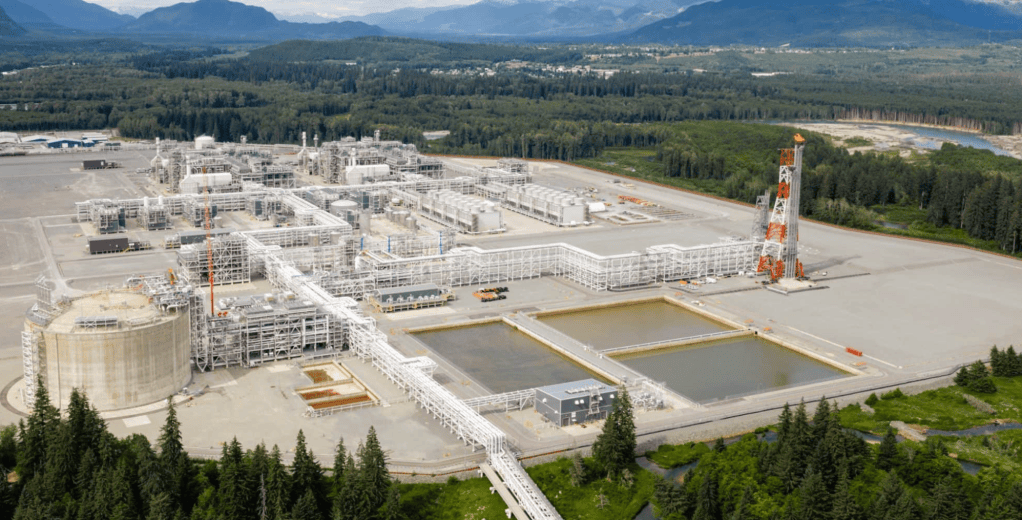
BC’s Conservatives have committed to doubling liquified natural gas (LNG) production by 2032 and tripling it by 2035. The province is already on track to more than triple production, as it currently has one operating LNG export facility and five LNG projects in development. The Conservatives have also pledged to eliminate BC’s industrial carbon tax in order to facilitate gas exports that are competitive with the US and Qatar. BC is the burgeoning frontier of Canada’s LNG production, the launch of the industry has been the province’s largest fossil fuel boom in history. Despite arguments that LNG is the least harmful fossil fuel, it is very dangerous for nature, climate, and public health.
LNG is natural gas cooled to -160°C and transformed into a clear, colourless, odourless liquid. Canada’s LNG export industry is marketed as a cleaner alternative to fossil fuels, aimed at phasing coal markets. However, LNG is still produced through fracking, which is extremely harmful to human and ecological health. Experts also warn that it is not guaranteed that LNG will disrupt coal production. BC’s current LNG facility is powered by natural gas, with those in development allegedly to be powered by hydroelectricity with the aim of “net-zero operational emissions”. However, this would only tackle a small portion of the life-cycle, with LNG producing massive emissions from extraction, transportation, and use. Furthermore, the amount of hydroelectric energy required to power BCs LNG industry would be extremely expensive for the province and its ecosystems. The transportation of LNG using pipelines and tankers is also very harmful to endangered terrestrial and marine species.
Accelerating logging and confusing stance on old-growth protection
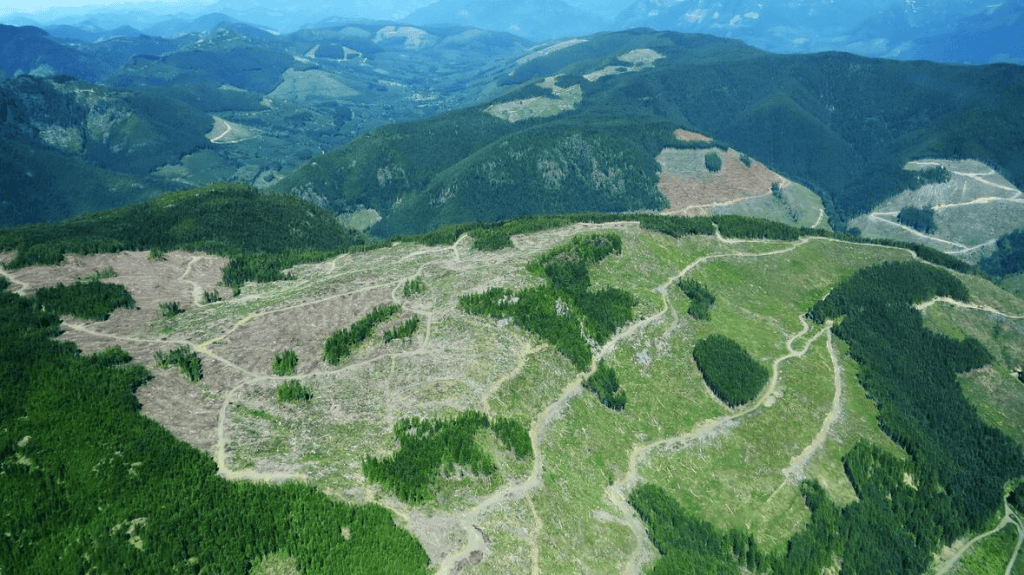
Doerkson’s Conservatives have vowed to support the lumber industry in accelerating its production, accessing more forest stands, and streamlining the permitting process. Specifically, the party has promised to open up land that was previously deferred for extraction and increase annual allowable cuts from 30 to 45 million cubic meters. This is in response to increasing strife within BC’s forestry industry, which recently saw major forestry groups publicly appeal to the BC government to save the sector from incoming collapse. Simultaneously, the Conservatives have vowed to protect “original” old-growth forests. However they have not released any plans to ensure the forestry sector is uplifted in ways which protect forest resiliency, diversity, and longevity. Environmental experts have warned that the party’s ambiguous language on forest protection but concrete stance on industry expansion is a bad sign for old growth forests.
Forestry is a hugely divisive issue in BC. The timber industry is a massive employer of Canadian and Indigenous communities, but has been implicated in the decimation of critical primary and old growth forested ecosystems. Simultaneously, the sector has been suffering from domestic and international stressors, exacerbated by recent US tariffs on softwood lumber. Among the many issues, allowable cuts permitted to logging companies have been highly unsustainable. Simultaneously, timber companies have not been logging trees damaged from increasing invasive species outbreaks like they are supposed to. Rather, they target live trees of higher economic value and thus leave stands of dead trees that fuel increasing wildfires. Recently, timber companies have not been logging their full allowable cuts – an indicator that they have already extracted the best and most accessible forest stands.
Positive news: Local wins for the BC Greens
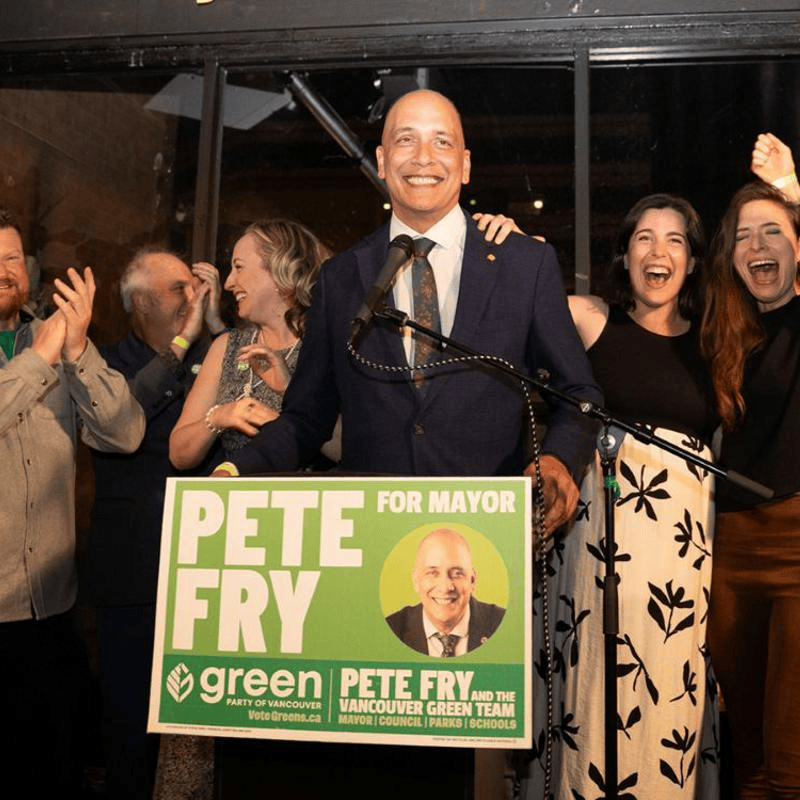
In spite of the concerning Conservative win, BC’s Green Party remains a source of hope in the province. In Vancouver, Pete Fry was elected as Canada’s first Green mayor after defeating the incumbent by over 31,000 votes. The Green Party of Vancouver additionally had all 10 of its running candidates elected across city council, the Park Board, and school board. Plenty of other municipal races saw wins for Green candidates, solidifying Green platforms at the local level. BC’s two Green MLAs – incumbent West Vancouver-Sea to Sky MLA Jeremy Valeriote and BC Greens leader Emily Lowan – continues to fight for the rights of British Columbians, Indigenous Peoples, and the environment:
“We may have a small caucus, but tonight we have inherited an enormous responsibility, and that is to hold a majority Conservative government to account … Over the next four years, our job is to be a voice for the many people who will be harmed by their policies. And that is going to require some serious movement building.” – Emily Lowan on election night
British Columbia needs a progressive government
The BC Conservative platform aligns with national and sub-national counterparts, neglecting climate and nature to fuel unregulated growth. The NDPs led by David Eby were also faltering on their commitments to climate, nature, and Indigenous Peoples. BC needs a provincial government that will stand strong in the face of federal and provincial mandates for removing public and environmental protections like those that have spread into other resource-rich provinces and territories. This is especially true as the feds and Alberta continue pushing for fossil fuel infrastructure through the land and waters of BC and First Nations.
Like I discussed in a past post about the Abundance mindset, efficiency within regulation is a sensible goal. However, deregulation of harmful industries who already benefit from extreme government subsidies, lobbying powers, and regulatory capture is not in the interest of constituents.
Sources & recommended reading
DRIPA:
- A Declaration of War, Signed by the Premier of B.C.
- An ‘awful’ year for reconciliation as BC moves to change historic Indigenous Rights law.
- BC’s Indigenous Rights law is now an election issue. Here’s what you need to know.
- Repealing DRIPA won’t remedy B.C.’s industry problems, say First Nations leaders.
- Repeal DRIPA, Promote Economic Reconciliation.
- Warren Mirko: Not helpful for B.C. Indigenous leader to declare ‘war’ on common sense policies.
LNG:
- How Canadian LNG Impacts the Climate: Carbon emissions, fuel switching, and cleaner alternatives.
- LNG Canada’s massive expansion is a go. Here’s what it means.
- LNG: News and Updates.
- Top 10 reasons to say NO to LNG in B.C.
Forestry:
- B.C.’s forestry sector on verge of collapse, industry leaders warn as they urge province to act.
- B.C.’s clear-cut forests are ‘dead zones,’ emitting more greenhouse gases than fossil fuels, report finds.
- Forests minister defends B.C. logging. Experts say clearcuts are still a problem.
- The ‘Reckoning’ Coming for BC Logging Licences.
- What Comes Next for Forestry in British Columbia.
- Victoria Buzz: Environmental advocates concerned over results of BC election.
BC Greens:


Leave a Reply