In early June, the federal government opened a consultation period about the potential conversion of the Toronto Island Airport into a significantly larger jet airport. This came after more brazen legislation from the Ford government which stood to degrade the noise, air, water, and land health of Toronto’s waterfront and override important prohibitions in place since 1983.
Island Airport governance, the Tripartite Agreement, and another Ford power grab
The Toronto Island Airport has a unique governance structure. It is owned and operated by the Toronto Port Authority (a Canada Port Authority), while the land on which is sits is split between the Toronto Port Authority (owns 78.5%), the City of Toronto (20%), and Transport Canada (1.5%). In 1983, these three actors signed a Tripartite Agreement which governs airport operations and ownership structure. The agreement specifically prohibits runway and landmass expansions, impose aircraft noise restrictions, and limit the types of aircraft which may operate at the airport. It is set to expire in 2033.
The Province of Ontario passed the Billy Bishop Airport Act (2026) on June 2nd, which allowed the province to designate the airport as a Special Economic Zone, acquire the airport lands and governance role owned by the City of Toronto, and override the Tripartite Agreement. The province conducted this reckless takeover to expand the airport to accommodate jet aircrafts and increase passenger traffic from 2 to 10 million people a year. Despite its claims of economic benefit, this is another unprecedented power grab from the Ford government that would harm overall livability and environmental integrity across Toronto’s waterfront.
Potential impacts
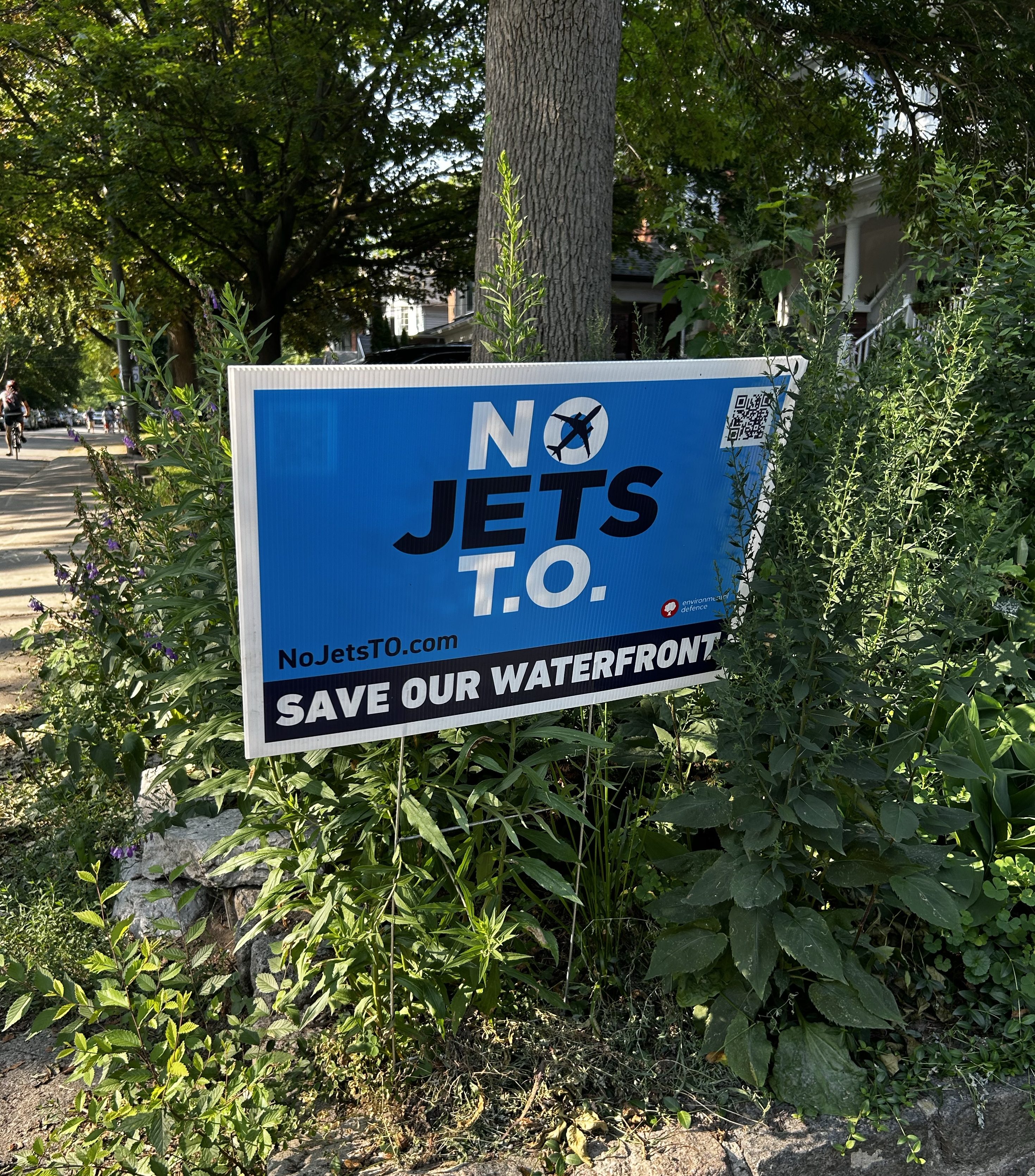
The proposed acquisition and expansion would have greatly harmed Toronto’s waterfront, from Mimico to the Scarborough Bluffs. This is a hugely important area for Toronto, providing recreation and services to tens of millions a year (the Harbourfront alone supports 18 million visitors annually), as well as important natural spaces and habitats. Environmental Defence and NoJetsTO have consolidated a library of research into the negative impacts. Highlights include: immense air, water, and noise pollution risks for humans and wildlife; significant increases to traffic and gridlock in already congested areas; extreme detriment to the biodiversity of the island and Toronto’s waterfront; and reversal of multiple years and billions of dollars invested into housing in the Portlands.
A rare win and (cautious) optimism
Due to the governance of the airport, the federal government had the final say on Toronto Island Airport’s fate. And on July 24th, Transport Minister Steven MacKinnon announced that the federal government was not going to support Ford’s expansion! This came after 87,000 survey responses with ~87% opposed the the changes, as well as countless email and letter-writing campaigns organized by groups like Environmental Defence and NoJetsTO.
Unsurprisingly, Ontario Minister Prabmeet Sarkaria responded by recommitting to an expansion that “protects public spaces … addresses potential noise and environmental impacts, expands and improves Little Norway Park, supports new housing opportunities in the area, and delivers lasting benefits for local communities.” However, it is unclear how the province plans to do with without federal support.
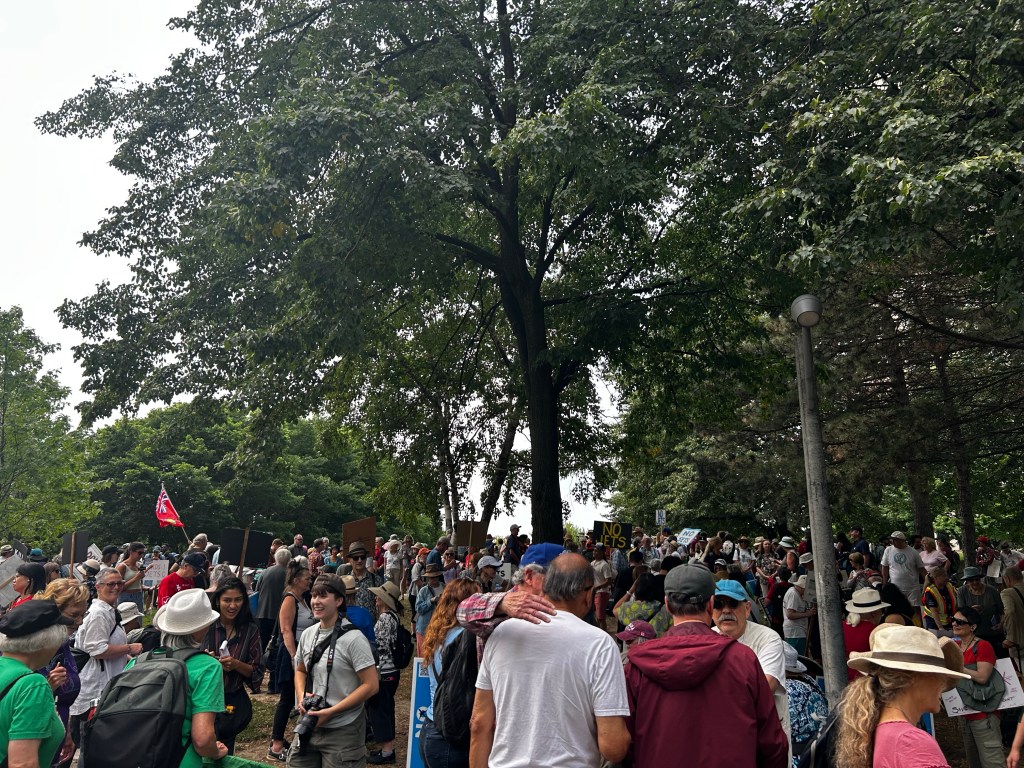
This federal refusal is a potent, much needed reminder about the power of the people. With the recent federal and provincial trends of overriding regulation and consultation processes, many of us have been burdened by concerns for our democratic rights and have struggled with feeling disempowered. In this political environment, it is easy to become apathetic and abandon advocacy. However, it is wins like this one which remind us of our collective power. On Sunday, I attended what was supposed to be a march and rally against the province’s airport expansion. Since the federal announcement, I was concerned that turnout would be lacking. But it was incredible!!! So many people (over 1000) came to celebrate the win, and organize for more progress within the province.
This is an important reminder that the federal government can step in when Ford’s government uses the law to bully lower tier governments and steamroll over social and environmental protections. However, this is a long time coming and is yet to be seen for species at risk – who will suffer under Ontario’s deregulation. Furthermore, Ontario still has forced ownership over Toronto Island land and has shown that it does not value the opinions of its constituents. Let us use this momentum to keep pressure on the governments which are meant to prioritize the best interests of their citizens and the environment we depend on.


Leave a Reply