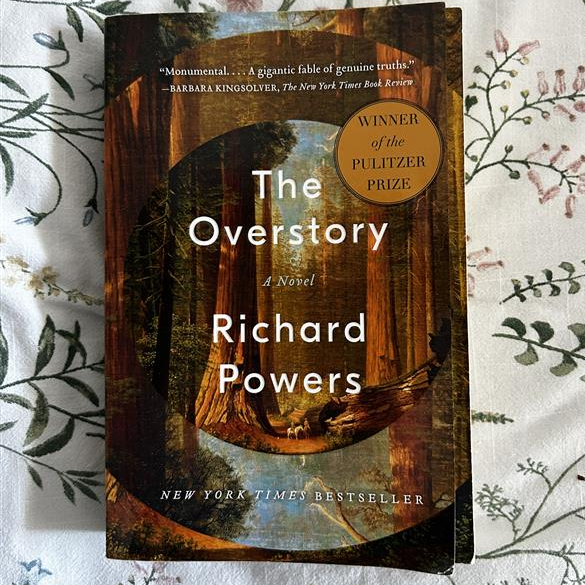
As I discussed in my previous blog post, I want to use my free time this summer to explore environmentalism and ecology through a diverse range of literature. My first fiction read was The Overstory by Richard Powers, published in 2018 and a winner of the Pulitzer Prize in Fiction. It is a tribute to the wonder and plight of trees, illustrated through the intersecting, complex lives of nine characters and their histories, legacies, flaws, strengths, and extremely diverse relationship with nature. The Overstory was an apt reminder that important lessons can be gleaned from novels, especially those about love, values, and purpose – which are critical when exploring your relationship with the natural world.
I will say, however, that The Overstory is limited by its startling lack of space for Indigenous Peoples, Knowledge, and stewardship. It was surprising that a story centered on trees did not touch on the Indigenous Peoples which have been oppressed from their traditional forest stewardship since colonization. While the nine characters are diverse in their backstories and cultures, it is a critical gap to not write about the involvement of Indigenous Peoples in old growth protection. Furthermore, the novel takes a very western science approach, discussing discoveries about the intelligence of trees and our relationship with them without acknowledging that such sentiments have been a core component of Indigenous Knowledge for centuries.
That being said, I do think that this book is worth the read – as long as the reader remains aware of its shortcomings. The three most important, overarching themes of The Overstory include:
Ecological enlightenment: Throughout the novel, the characters become aware of the miracles performed by trees and their ecosystems. In their own unique ways, they discover ecology, i.e., the highly complex and extraordinary ways that wildlife (especially trees) persist and interact. People of extremely different backgrounds and beliefs come to the same conclusion over different, linked timelines – that the planet is upheld by endless, unknown, extremely delicate systems, processes, and functions happening over space and time. I thoroughly enjoyed these journeys of “ecological enlightenment”, having experienced this during my time in university. The Overstory’s characters teach us that anyone can become acquainted with the natural world, all you need is curiosity.
Radicalization and extraction: Similarly to the discovery of ecology, The Overstory illustrates the radicalization that accompanies newfound awareness of the destruction caused by unconstrained extraction. Characters come to terms with the rapid loss of trees, forests, and the species they support. This is primarily reflected through an examination of unsustainable timber industries within old growth forests, and coordinated resistance movements against such extraction. However, anthropogenic threats to trees are also explored through the spread of disease, invasive species, climate change, and land use change. Overall, the reader follows the slowly intertwining lives of nine people as they are awakened to the fact that human production is exterminating the systems which keep us alive.
Love between humans and trees: Perhaps the most important part of The Overstory is the way the characters protect and are protected by the trees around them. Each person, many of which were indifferent to nature in the beginning, end up turning to trees for love and comfort, and offer protection and respect back. The parallels between natural and personal growth allow the reader to reflect on their spiritual and biological connections to beings which likely go unnoticed every day. The Overstory illustrates the struggle of those attempting to understand and preserve the endless, incredible ways that trees survive, communicate, and adapt.
If you are interested in learning more about trees, I would recommend the work of Dr. Suzanne Simard, a leading forest ecologist based in British Columbia. Her first book, Finding the Mother Tree: Discovering the Wisdom of the Forest, chronicles her ground-breaking research into how trees are social, collaborative beings. Her second book, When the Forest Breathes: Renewal and Resilience in the Natural World, came out this year and focuses on ecosystem regeneration and climate resilience. In fact, Sierra Club BC is hosting a free webinar with Dr. Simard about her recent work this coming Monday, June 6th! I would also point people to Indigenous authors such as Robin Wall Kimmerer, who offers insightful introductions into Indigenous stewardship, as well as learning about Indigenous land defense movements across North America (start here, here, and here!).


Leave a Reply