Derek Thompson and Ezra Klein propose a well-intended but flawed philosophy
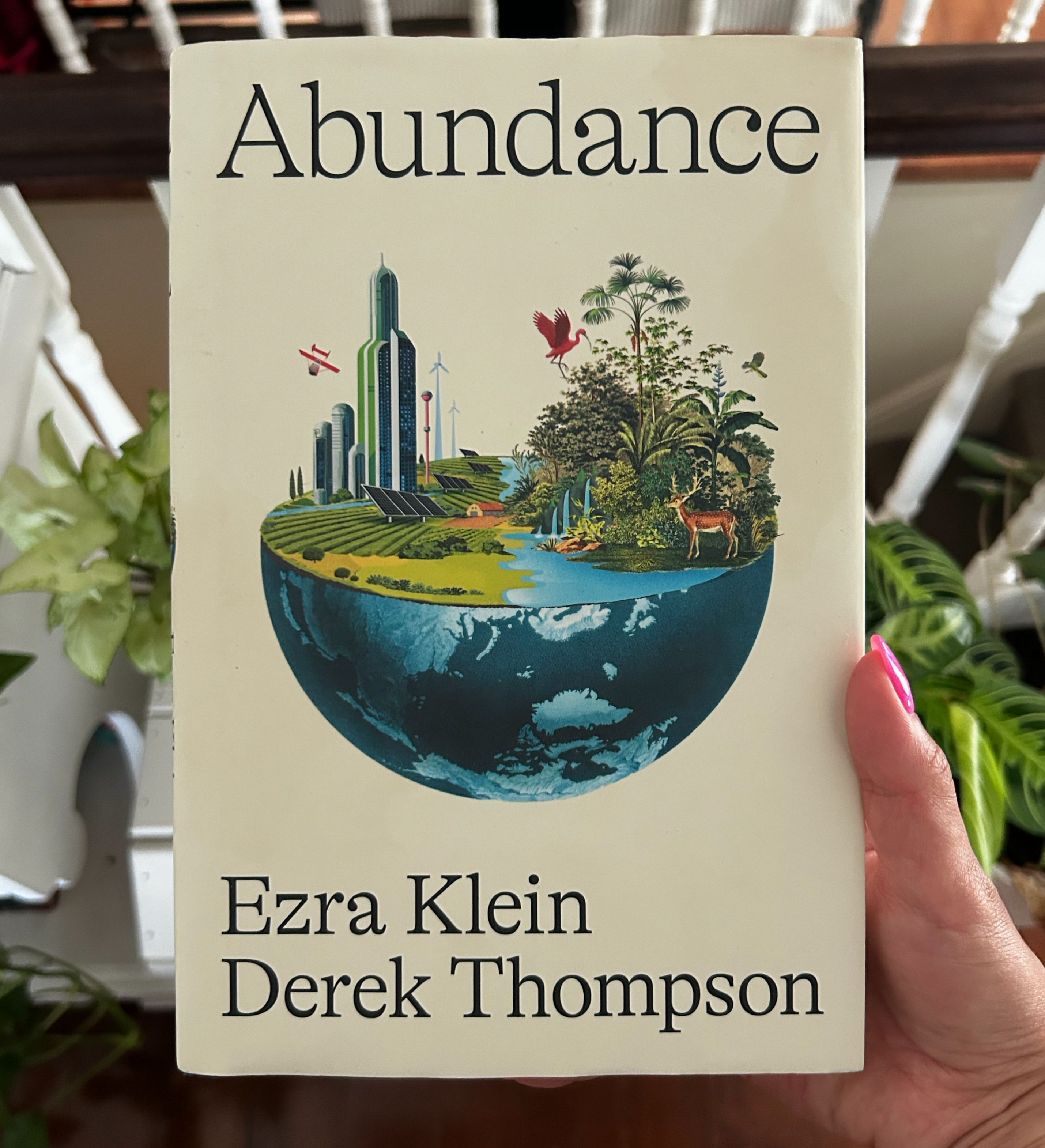
Abundance was recommended to me by multiple professionals in my field. Written by Derek Thompson and Ezra Klein, Abundance proposes a new philosophy for America’s politics based on politics and laws that expedite growth. They argue that this new form a liberalism is critical to address climate change and economic issues across the country. As political experts, journalists, and writers, Thompson and Klein are well-informed and make some important arguments. And while I admit that my knowledge of economics is introductory, I could not help but notice a glaring gap in Abundance’s arguments and it concerns me that this thinking seems to be driving our current federal government.
Thompson and Klein seek to solve the climate crisis through an abundance of innovation, technology, science, and finance supported by a combination of government support and private entity empowerment. However, while they dive into the economic, political, and legal components of their theory, they neglect to pay any adequate attention to the biology of the landscapes which are to be used for such abundance. Yes, their arguments for climate action, housing, scaling and deployment of innovations, and other interventions are important and insightful. However, the conservation and restoration of land, water, and overall biodiversity is completely overlooked, despite its undeniable connection to the climate crisis and role as the literal foundation of society. Klein and Thompson argue for carbon capture, but neglect to propose ways to conserve the most efficient, effective kinds of carbon capture – healthy wetlands, oceans, and forests.
Thompson and Klein additionally take the stance that regulatory burden is the bane of socioeconomic flourishing, particularly environmental protection laws. However, they neglect to propose a solution for streamlining such laws without irreversible, lasting ecological damage. While I agree that regulatory inefficiency should be addressed, this shouldn’t directly threaten or compromise the health of vital ecosystems. Furthermore, capitalist wealth accumulation and unethical practices by actors such as AI companies and billionaires is glossed over, despite their undeniable influence on current climate, nature, housing, health, and other socioecological crises.
Recent federal deregulation
Despite his experience with climate finance, Carney’s recent environmental rollbacks demonstrate the short-sightedness of Abundance thinking. These include provisions in the Building Canada Act; the Alberta-Canada MOU; proposing to implement special economic zones, weaken the Species at Risk Act, and facilitating pre-approval for pipelines; and more. As argued by environmental experts, these attacks on ‘red tape’ are not inconsequential. You know what else is crucial for nation-building? Functioning ecosystems which clean our air and water, uphold our food systems, and provide materials for infrastructure. An article by one of my professors, Trevor Swerdfager, and Wildlife Conservation Society Canada president Justina Ray encapsulate this perfectly:
“The real reason for regulatory gridlock lies not in excessive caution, but in our fragmented approach to decision-making. Each new crisis prompts another layer of rules, added piecemeal rather than through systemic reform. We treat the environment as disconnected parts instead of an integrated whole. The result is process without purpose: a proliferation of paperwork that obscures outcomes. Simply stripping away “red tape” does not fix this; it only weakens public trust when environmental damage continues despite deregulation. Unless governments rebuild these systems coherently, rather than dismantling them, they will erode both ecological resilience and social licence.”
Whilst recent federal nature policies are a good start, there is a clear lack of biological understanding in national building, energy, and impact assessment policies. I have been personally told by experts that Carney’s office does not have adequate experts representing the critical, science-based needs of nature.
In summation, Abundance argues against degrowth models but ironically reinforces one of they key degrowth criticisms of growth narratives – a disconnect from the biology of our planet.


Leave a Reply