June 16th to 22nd is Pollinator Week in Canada! In honour of this week this post will explain the very convenient ways you can support our amazing pollinators.
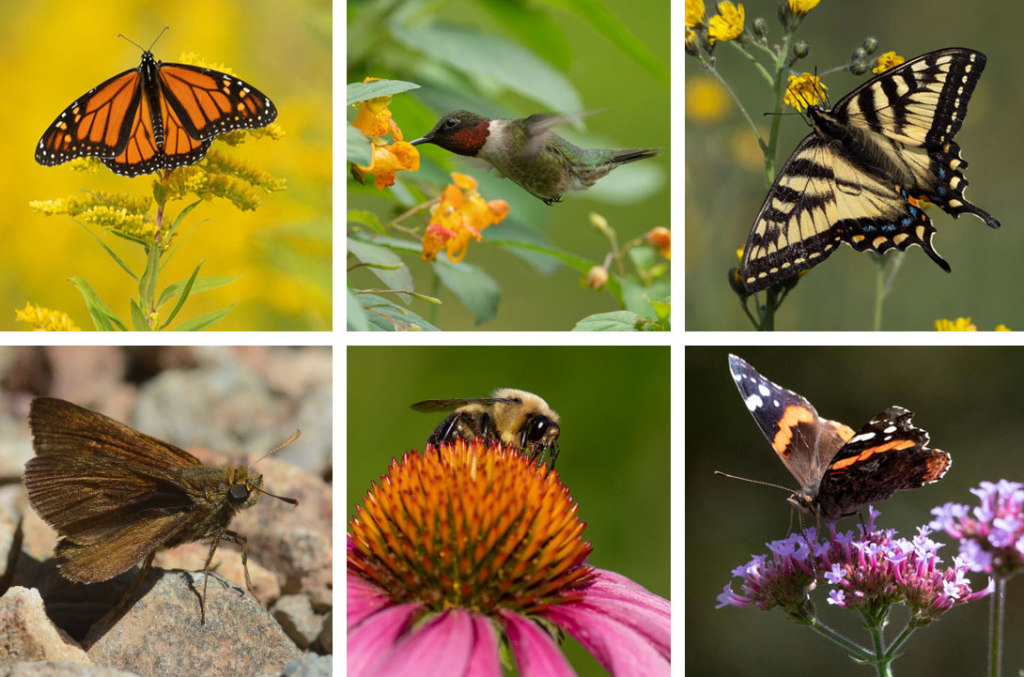
Initiated by Pollinator Partnership, this week aims to raise awareness about pollinators’ importance, threats, and the ways we can all give back to them.
Pollinators sustain us
Pollinators transport pollen grains from the male to female parts of plants as they travel between them, enabling the production of seeds, fruits, and future plants. In Canada, pollinators primarily consist of bees, butterflies, moths, wasps, flies, beetles, hummingbirds, and bats. Bees are the most common, with over 800 species native to Canada!!
Directly and indirectly, pollinators uphold our agricultural economies, food systems, and all of the ecosystems, landscapes, and natural resources we use, visit, and value. According to Pollinator Partnership, pollinators …
- Are responsible for every 1 of 3 bites of food we eat.
- Add ~$217 billion to the global economy.
- Support the 75% and 95% of Earth’s flowering plants which need pollination to survive.
- Provide pollination to more than 180,000 different plant species and over 1200 kinds of crops.
- And more!
Unfortunately, pollinators are facing decline both nationally and internationally due to habitat and food source loss, pollution and chemical exposure, climatic changes, diseases, viruses, and pests.
Helping them is so easy!
Supporting pollinators can be SO fun and fulfilling, even in the city!! Urban and suburban areas can actually be turned into very suitable pollinator habitats. The most accessible way to do this is providing them with more food and shelter. For those with limited space and resources, this could involve simply planting native plants in your garden or planters. On a larger scale, you can create pollinator gardens on your property – which is so much easier than it sounds! Luckily enough, so many environmental organizations have initiatives supporting such endeavors. Just some of these resources are discussed below!
Planting native plants
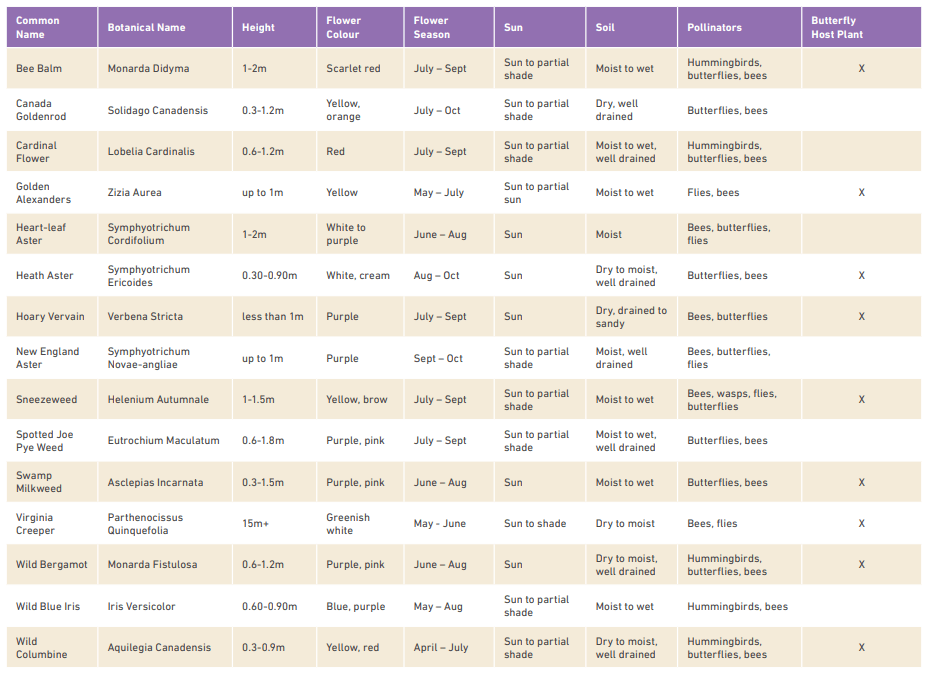
Pollinators have evolved to be dependent on the plants native to their specific regions. Just by planting some native species in planters or gardens, you can help pollinators thrive. This can be done anywhere outside – yards, balconies, etc.! To find species native to your specific ecoregion, the David Suzuki Foundation has curated Pollinator Planting Guides for Atlantic Canada, Quebec, Ontario, the Prairies, and British Columbia, simply click the links and scroll down to choose from the ecoregion guides! The Pollinator Partnership also has more detailed Ecoregional Planting Guides for North America, which can be accessed by inputting the first three digits of your postal or zip code!
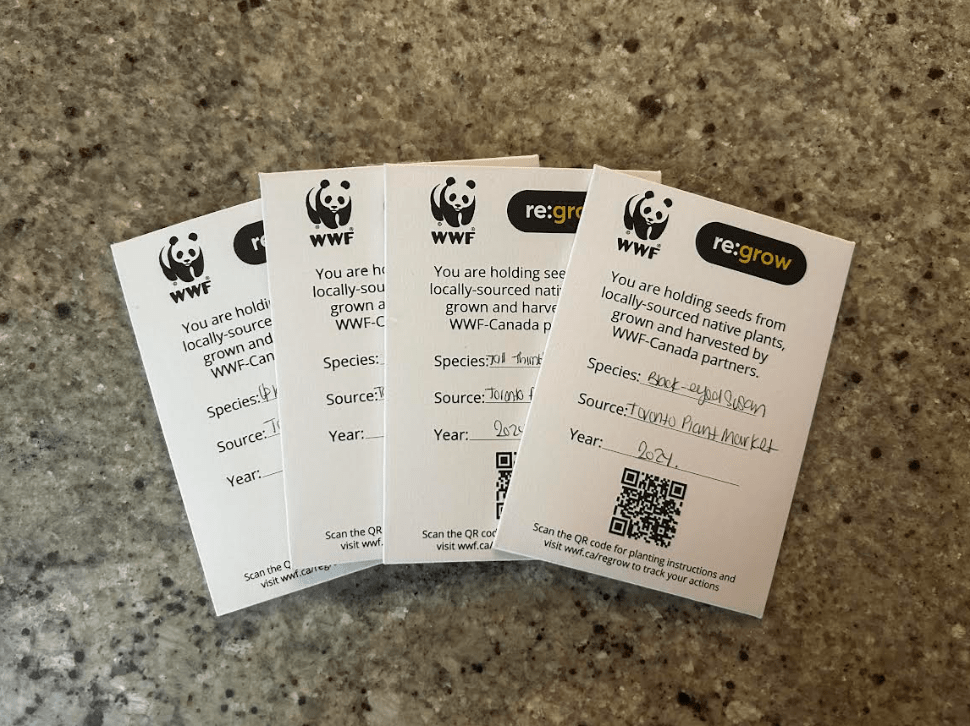
WWF-Canada’s re:grow program supports Canadians growing native plants through their re:plant initiative. Among a plethora of other resources, the initiative provides free step-by-step guides to plant native plants and trees! If you live in Ontario and want to support the WWF, you can purchase native Ontario seed packs from them. You can also purchase sunflower seed packs, which pollinators love. However, I would recommend checking out local nurseries or garden centres for more variety.
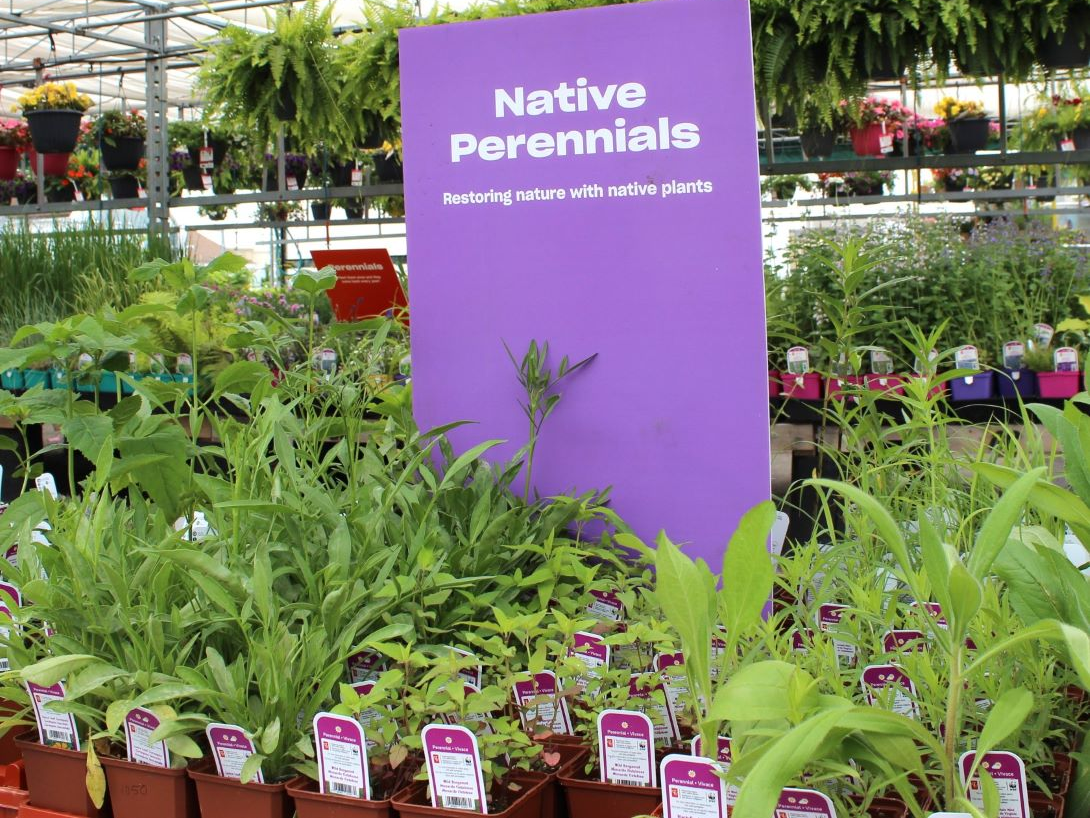
WWF-Canada also has a native plant partnership with select Loblaw garden centres in Ontario and Quebec. Plants labelled with the WWF logo (below) are: Canadian grown, native to the region, sourced from a local and originally wild population, grown from ethically-collected seeds, genetically diverse, not cultivars or nativars, and grown without neonicotinoids and glyphosate!
Creating a pollinator garden
A pollinator garden is easier to achieve than it sounds, and is very easy to maintain. It is just a garden (of any size) with plant and design choices built to provide food and shelter for pollinators! There are many initiatives and networks for pollinator gardening in North America. WWF-Canada outlines 5 key attributes for pollinator gardens:
- Healthy native plants that will flower throughout the growing season.
- Plants of the same species grouped together.
- Some kind of water source for insects and birds – this could be a small bird bath, water feature, or even a small depression in the ground that holds water!
- Leaving some organic debris (leaves or dead flower stalks) in the Fall – this provides crucial shelter for young bees and insects, as well as food for wildlife and new seedlings!
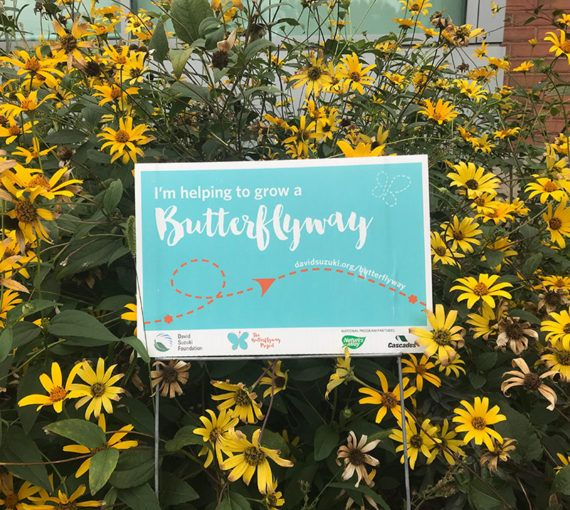
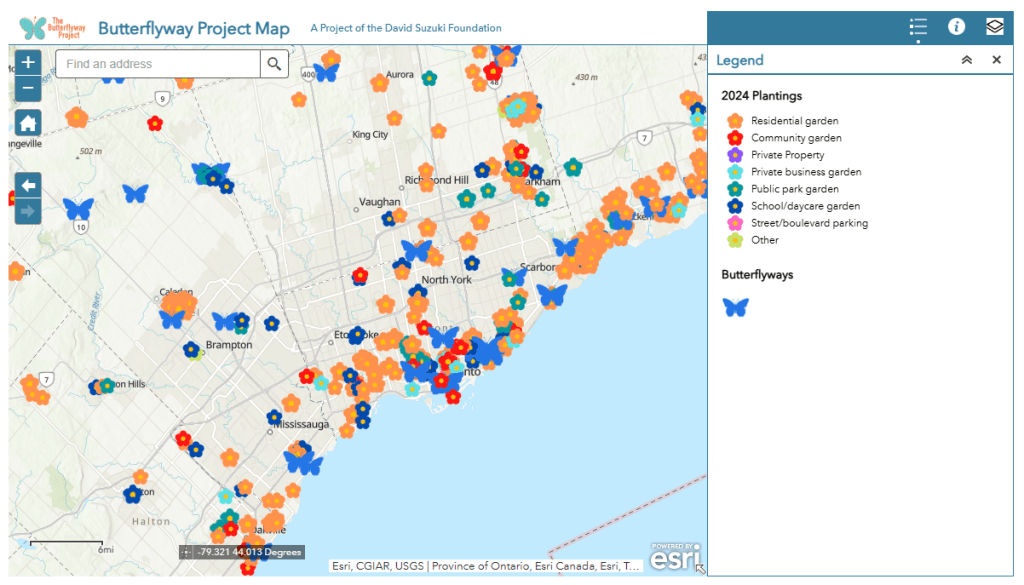
The Butterflyway Project by the David Suzuki Foundation is one I have seen a lot of in my own neighbourhood. It is a volunteer-led movement in which ‘Butterflyway Rangers‘ spread the word about native pollinator gardens in their neighbourhood, and help locals get involved in creating highways (patches of habitat and food sources in close proximity to one another) for bees and butterflies. Keep an eye out for gardens in your area with Butterflyway signs like below! Learn more about the story behind the Butterflyway Project and access their most recent Gardening Resources Newsletter.
The Canadian Wildlife Federation’s Gardening for Wildlife program has a bunch of free resources (webinars, online courses, handbooks, articles, etc.) for wildlife gardening. Through this, you can follow a detailed pathway toward certifying your garden as a “wildlife-friendly habitat”!
The Pollinator Partnership has a Bee Friendly Gardening membership program across North America. For $20 a year, you can access many resources, networks, certifications, and discounted consulting services to support you in creating bee (and other pollinator) friendly gardens!
WWF-Canada’s re:grow program discussed above can also support you in creating a pollinator garden that supports other wildlife! By creating a free account, you can access detailed guides for planting and stewarding native species, supporting wildlife in the fall, and harvesting native seeds.
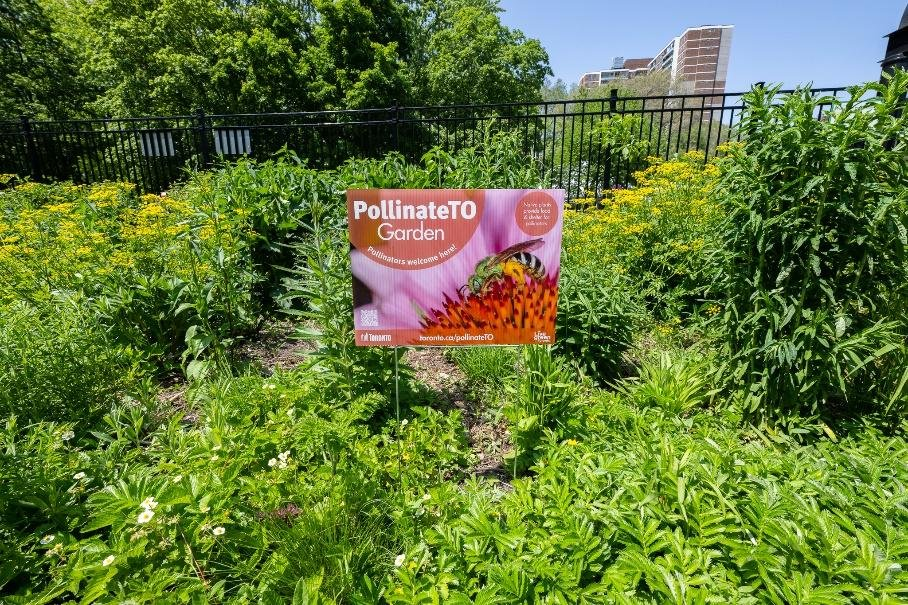
If somewhere you work or volunteer is thinking of creating a pollinator garden in Toronto, Pollinate TO provides grants of up to $5000 for community-led projects that aim to create publicly-visible pollinator or rain gardens in the city! There is likely some Pollinate TO gardens near you that you can visit for inspiration.
Final thoughts
As I said above, these are just some of many resources that will support you in growing native plants and pollinator gardens. In doing so, you can give back to the environment while creating sustainable, beautiful spaces on your property and in your neighbourhood! If you are overwhelmed about current environmental issues, contributing to a local cause can greatly improve mental wellness and help you feel hopeful about the world around you.
References
Sources linked in article.


Leave a Reply