There have been so many things I’ve wanted to blog about this month, but I just can’t find the time!! However, I would be remiss to not share my opinions as COP30 wraps in Belém, Brazil. My feelings about the climate COPs are complicated. We are barreling into climate catastrophe after 30 of them, and the interests of the biggest polluters (both industry and country) continue to inhibit progress. That being said, I believe they remain essential, and better than nothing.
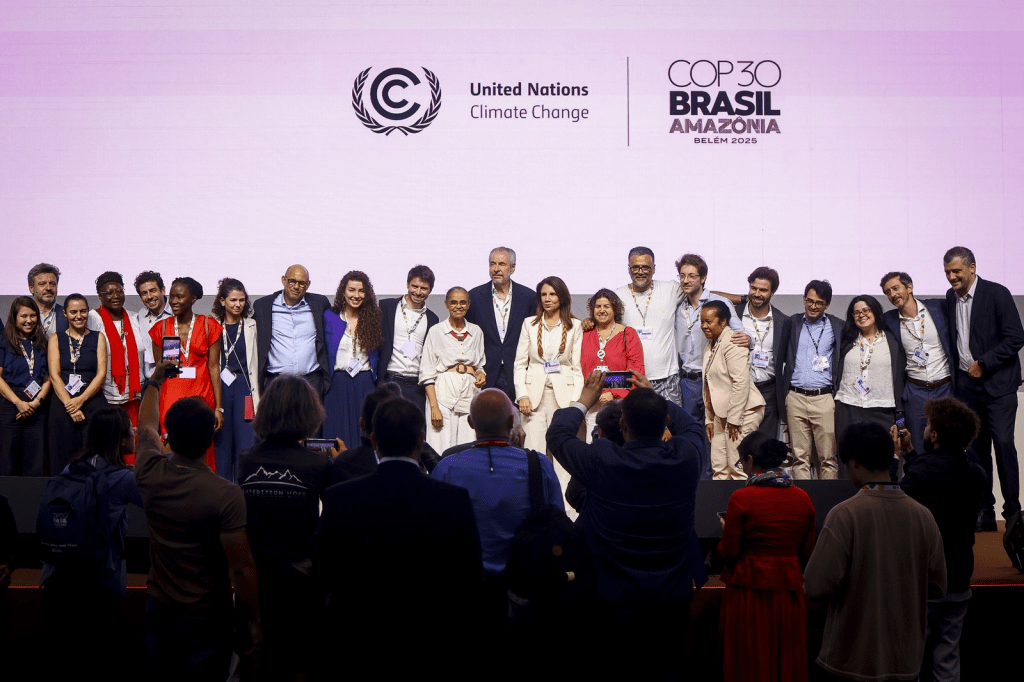
So, let’s talk COP30. It was divisive AF.
COP failed to commit to fossil fuel phaseout, again
Over the past 30 COPs, and especially as climate disasters increase and we enter our first climate tipping point, the main concern has been the language used to describe the Parties’ commitment to fossil fuel reduction. We need a commitment to fossil fuel phaseout, rather than a transition away from fossil fuels. This is especially true for underdeveloped countries shouldering the majority of the climate burden. It took until COP28 to finalize the language “transition away from”, a complete injustice to the nations, cities, towns, and people who have been irreparably harmed by climate disaster.
Unfortunately, this year’s final agreement did not make collective progress in this regard – despite 80+ countries and 100+ organizations requesting that the COP president mandate a roadmap for the Parties to transition away from fossil fuels. In common form, pressure from petrostates such as Russia and Saudi Arabia resulted in a voluntary roadmap for those willing to participate in the fossil fuel transition.
The proposed Fossil Fuel Treaty gained some momentum
The proposed Fossil Fuel Non-Proliferation Treaty is led by Fossil Fuel Non-Proliferation Treaty Initiative, a growing movement of governments, scientists, civil society organizations, academics, Indigenous peoples, and more. They are working towards a binding agreement to end the expansion of new fossil fuel projects, as well as a just global transition away from fossil fuels. In the past six years, they have been endorsed by 18 nations, 143 cities and subnational governments, 4105 organizations, institutions, and businesses, and over 1,061,142 individuals.
At COP30, Cambodia signed on as the 18th nation-state in support of the Treaty. Colombia and the Netherlands also agreed to co-host the first International Conference on the Just Transition Away From Fossil Fuels. This could facilitate some real progress unburdened by those who refuse to act. And unfortunately, as more countries grapple with the affects of climate change, it will become an issue that no one, even the wealthiest, can ignore.
Fossil fuel lobbyists outnumbered every delegation except Brazil
Kick Big Polluters Out (KBPO) found that 1,600 oil and gas lobbyists attended COP30, a larger delegation than every nation but Brazil, the host country. KBPO concluded that these lobbyists received two thirds (66.67%) more COP30 passes than the 10 most climate-vulnerable countries combined. Furthermore, KBPO also found that industrial agriculture firms sent over 300 lobbyists to COP30, some of which hosted invite-only events for attendees.
No deforestation mandate, but another voluntary roadmap
Forests, especially tropical and sub-tropical rain forests, are essential to global climate change mitigation. They store an incredible amount of carbon, as well as a ginormous wealth of biodiversity. Despite the talks occurring in the heart of the Amazon rainforest, the final COP30 agreement did not mention deforestation. Rather, the President announced a separate, voluntary roadmap for forest preservation. Furthermore, the President’s proposed fund for rainforest protection was endorsed by 53 countries who pledged $6.6 billion, in comparison to the initial target of $25 billion. However, Colombia made a landmark declaration that its entire portion of the Amazon basin would be protected from large-scale mining and hydrocarbon activities – instead being a “renewable natural resource reserve”. So, some good news, but not nearly enough.
Indigenous participation, progress, and protests
COP30 was designed to include landmark Indigenous participation, underlining the absolute necessity of support and empowerment for Indigenous nations and peoples. While 2,500 Indigenous peoples attended the conference, only 14% had access to the Blue Zone – the location for official negotiations. However, progress was made when Brazil announced the demarcation of 10 Indigenous Lands, triggering the process for these areas to be territories solely used by those living on them.
COP30 was also marked by a myriad of Indigenous-led protests against increasing industrial land uses harming territories, ecosystems, species, and ways of life within the Amazon forest and across the globe. Indigenous stewardship of Indigenous land is not only crucial for global biodiversity protection (82% of the world’s biodiversity is protected by Indigenous peoples), but it is central to Indigenous sovereignty and wellbeing. While I agree with the numerous reports and organizations insisting that Indigenous-led resource conservation is crucial to achieving climate and biodiversity targets, this must be solely led by the Indigenous nations, governments, and peoples themselves.
Climate change adaptation financing still not good enough
The final COP30 agreement calls for the tripling of funding for climate adaptation to $60 billion, to be provided by wealthy nations for vulnerable countries facing increasing climate disaster. However, the language lacks actual implementation description, and the deadline was pushed back from 2030 to 2035. Furthermore, UNEP estimated the need for adaptation financing for developing countries to be between $310 billion to $365 billion per year between now and 2035. Again, this underscores the ridiculousness of those inhibiting climate progress for short-term financial gain. Climate change is on track to be the single largest financial burden for all countries, greatly outweighing mitigation costs.
Carney skips COP, announces fast-tracking of Ksi Lisims liquefied natural gas project in BC
PM Carney – the former United Nations Special Envoy on Climate Action and Finance – decided to skip the 30th COP. On Nov 13th, he announced that the Ksi Lisims liquified natural gas (LNG) project in BC has been sent to the Major Projects Office for National Interest Project designation. Under the new Build Canada Act, these projects are granted the ability to override “red tape”, i.e., the ability to circumvent environmental protection and health laws. Ksi Lisims will be a massive LNG export facility on two floating platforms in the waters off of BC’s northwest coast, within the Nisga’a Nation territory. It is set to process up to 12 million tonnes of LNG per year. It will be powered by the incoming 450km North Coast Transmission Line running from Prince George, BC. Although it will be developed in partnership with Nisga’a Nation, it will be owned and operated by US-based Western LNG and financially backed by Blackstone Inc., a US investment company (that has major ties to Trump, BTW).
There is so much to be said about this new commitment to LNG. Overall, it signals a complete indifference to climate disaster and biodiversity loss. Similar to the recent federal budget, which is just sad from an environmental and climate standpoint (see here and here). While Environment Minister Julie Dabrusin attended COP30, I have my own personal opinions about her. This is a crucial, crucial time to represent Canada’s environment and climate change policies. Dabrusin needs to be strong enough to ensure these policies are actually holding economic priorities accountable, and thus far, I haven’t seen any of that – but that’s just one girl’s opinion.
So, what does this mean?
COP30 was divisive, as per usual. Unfortunately, climate change is not going to wait for us to catch up. The world cannot afford divisiveness, no matter what small steps are being taken. As global progress stalls, climate emergencies increase in frequency, severity, and uncertainty. As fossil fuel reduction becomes highly politicized, and COP talks become saturated with fossil fuel interests, is the pursuit of consensus inhibiting action by those who want to lead the charge?
Although there is an immense amount of work to do, the Fossil Fuel Treaty momentum does excite me. It signals a path forward for those who are ready to be on the right side of history. Hopefully, as the coalition of the willing grows, this momentum will outpace those unwilling to put the survival of humanity above short-term profit. In the mean time, I would highly recommend looking into and following the Fossil Fuel Treaty Initiative, they are doing incredible work!!! Endorse the Treaty by adding your name here!
Sources/Learn more:
- Did COP30 Succeed or Fail? (Earth.org article)
- Cop30: five reasons the UN climate conference failed to deliver on its ‘people’s summit’ promise (BBC article)
- COP30 pushes through uneasy climate deal that sidesteps fossil fuel concerns (CBC News article)
- Indigenous People, Long Sidelined at Climate Talks, Take the Stage in Brazil
- Brazil creates new Indigenous territories during protest-hit COP30 (BBC News article)
- Ksi Lisims LNG project in northwest B.C. survives judicial challenge (CBC News article)
- Ksi Lisims LNG is on Carney’s nation-building list. Here’s what you need to know (The Narwhal article)
- Running on Fumes: B.C. LNG’s Overhyped Promises, Risky Future and Public Costs (David Suzuki Foundation report)

 Abby Shin
Leave a comment