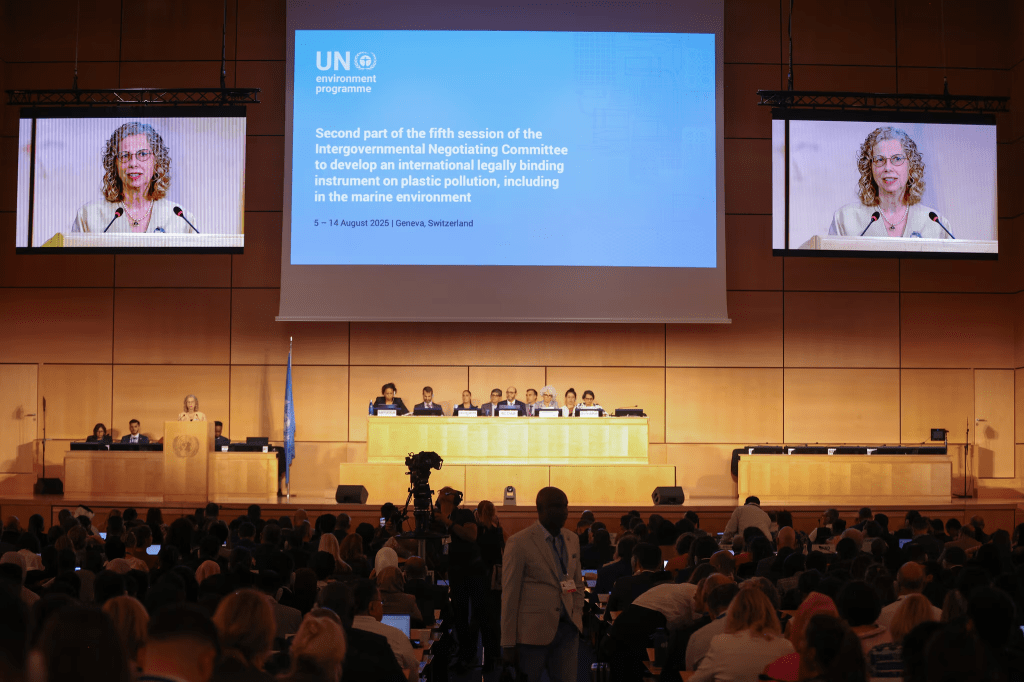
The latest round of UN negotiations regarding an international Plastics Treaty (Intergovernmental Negotiating Committee on plastic pollution, including in the marine environment [INC-5.2]) have ended in failure and disappointment, again. This comes after three years of debate, and countries remain deeply divided. I am upset, but not surprised. It seems like everyone everywhere is moving backwards. I know that this is not true, and it is unhelpful to focus on the negative news and undermine all the positive. But, with an issue as serious as the plastics crisis, it is hard to not wallow.
In my opinion, the issue at its core is an inability to imagine, mixed with the usual lobbying and influence of powerful corporations and those profiting off them. Countries opposing a phaseout of plastics continue to underline their utmost importance to normal ways of life. I am not discounting this, plastics are relied upon in every sector and almost aspect of life. They, from an industrial perspective, are a miracle. A material made to last forever. But this is the exact reason that plastics pose such a gargantuan issue – they. last. forever. Not to mention that they are just plain toxic. I am sympathetic to this argument when it comes from undeveloped countries, who have watched developed nations rely on plastics and fossil fuels for all of their successes, but are now being told they should not do the same. But I have zero understanding for wealthy countries that are lazy, and don’t want to go against the grain. That is a huge issue in all global environmental talks, wealthy countries refusing to shoulder the costs for crises they caused.
Issues like plastics pollution cannot be treated like a choice. It doesn’t matter how important plastics are to wealthy, developed countries. It doesn’t matter how inconvenient and difficult it is to phase them out. The threat they pose outweighs it all. We worship human ingenuity and problem solving until the problem is being caused by those of power and influence – it is then when we refuse to admit or imagine that there are solutions.
There is a ginormous mis-match between our social and ecological systems.
My first year in Environmental Studies, I learned something glaringly obvious but jarring all the same – the bedrock of most modern societies was always destined to be our undoing. In less dramatic terms, economies based on linear systems of extraction, production, consumption, and disposal were never sustainable but became monstrously ingratiated in almost every aspect of humanity. Capitalism and its emphasis on everlasting growth seems as though it will be the end of all of us. This is a generalization, I know. It is not just capitalism, it is greed, it is an inability to understand facts that go against this greed, and it is the spiritual and philosophical belief that humans are above Nature and will (somehow) continue to thrive without a healthy environment. This is not the case for everyone, of course, but it is for those of greatest influence over our resources and economic systems. Plastics, and their permeation into our society, is the perfect example of this.
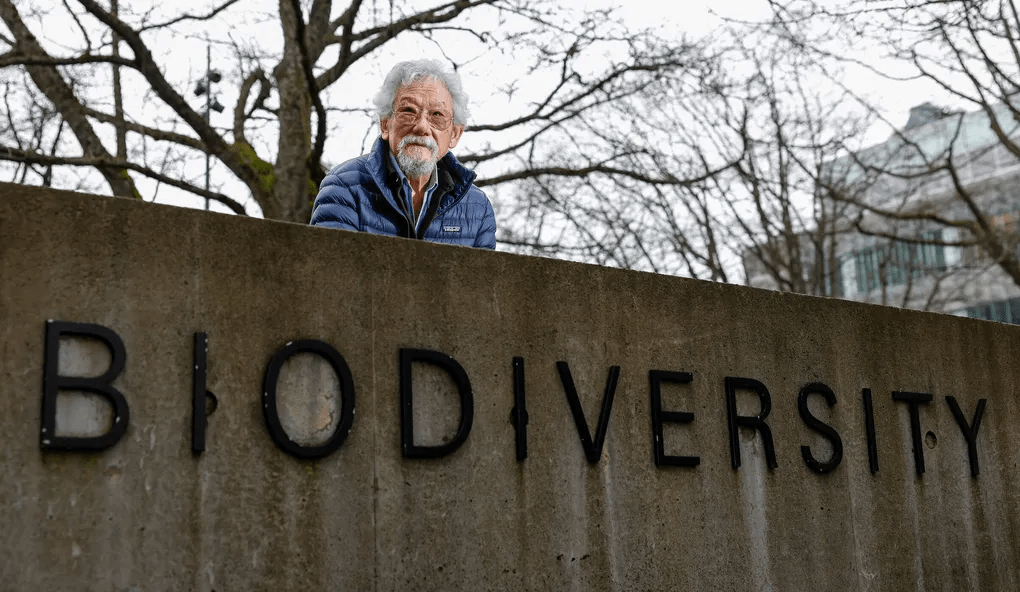
If you asked most environmental and social justice experts what their ideal, “in a perfect world” solution would be, they would likely say a complete overhaul of these linear, unequitable, over-consuming social and economic systems. David Suzuki, just one example, has been saying this forever (read this interview with him in the Seattle Times!!). Yes, this would be an enormous task, but again, it shouldn’t be viewed as a choice. As long as linear processes are the norm, we will continue treating finite resources as infinite, worsening the already disastrous climate emergency, and leaving future generations with failing ecosystems and depleted resources. Look at what is happening now, climate disaster, ecosystem collapse, mass extinction, huge wealth gaps, billionaire-controlled governments. This is all the inheritance of the linear systems of the past, exacerbated by linear systems of the present.
We can practice our own circularity.

Until the larger systems catch up, we can begin to overhaul linearity in our everyday lives. The easiest way to do this is by cutting out plastic wherever possible! Low or zero plastic alternatives are growing more and more accessible, and actually tend to be more economical, healthy choices! This summer, I was able to significantly cut down on my plastic consumption and overall waste in my bathroom and kitchen. I replaced my toothbrush, shampoo, conditioner, body wash, and face wash with bar versions from my local health food store. I also replaced my kitchen sponges, dish soap, and paper towels with items from Zero Waste MVMT. Next up, I want to replace my beauty supplies with low or zero-waste items! Every alternative I have tried has worked just as well as their plastic counterparts, and it makes me happy to know that I am actively lessening my ecological footprint as well as my exposure to plastics.
Sources
Almond, E. (2025). ‘Absolute self-destruction’: David Suzuki has bad news about the environment. Seattle Times. https://www.seattletimes.com/pacific-nw-magazine/march-23-david-suzuki-feature/
Crowfoot, T. (2025). Global plastics treaty talks collapse, and other nature and climate news. World Economic Forum.https://www.weforum.org/stories/2025/08/global-plastics-treaty-talks-collapse-nature-climate-news/

 Abby Shin
Leave a comment